How Dr. Martin Luther King Jr.’s Legacy Is Being Interpreted and Contested in 2026 Observances
A national remembrance anchored in unfinished work
Martin Luther King Jr. Day is observed each year on the third Monday of January, a federal holiday created by law in 1983 and first observed nationwide in 1986. Since 1994, federal legislation has also framed the holiday as a national day of service, encouraging volunteer work as a form of civic participation tied to King’s public legacy.
The 2026 observance arrives with renewed attention to how King’s life and message are presented in public life—both through commemorations that celebrate major civil rights milestones and through debates over which parts of his agenda receive the most emphasis.
What King is widely remembered for—and what is often less discussed
King became a central figure of the modern civil rights movement after helping lead the Montgomery Bus Boycott in 1955–56. His leadership helped galvanize nonviolent mass protest and national political pressure during a period of legally enforced segregation across much of the United States.
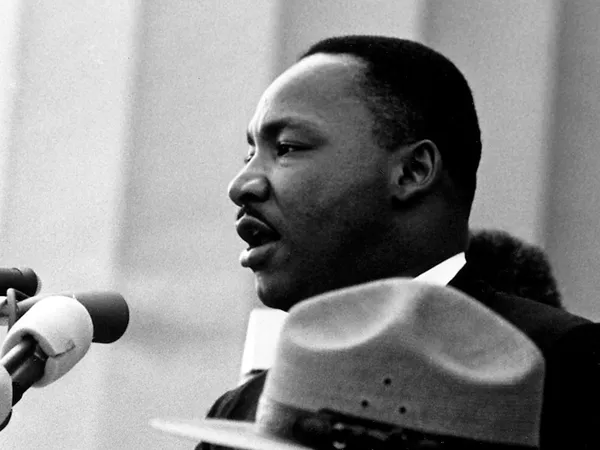
His public role included the 1963 March on Washington, where he delivered his “I Have a Dream” address, and continued through the mid-1960s amid campaigns focused on voting rights and desegregation. That era culminated in landmark federal changes, including the Civil Rights Act of 1964 and the Voting Rights Act of 1965.
In later years, King increasingly linked racial justice to economic inequality and U.S. foreign policy. His April 4, 1967 speech at Riverside Church in New York City publicly condemned the Vietnam War and argued that militarism and poverty were interconnected with racial injustice—an expansion of themes that remain central to many contemporary interpretations of his legacy.
Memphis as a focal point of commemoration
Memphis remains a defining place in King’s story. He was assassinated in the city on April 4, 1968, while supporting sanitation workers demanding better pay and working conditions. Annual observances in Memphis often connect remembrance to labor rights, voting access, and community-based service, reflecting how King’s final days underscored the economic dimensions of civil rights.
Competing public narratives around King’s message
Across the country, organizations and public institutions continue to hold parades, panels, educational programs, and service projects. At the same time, the holiday is repeatedly shaped by disputes over which “King” is being invoked: the advocate of legal equality and nonviolent protest, the critic of poverty and economic exploitation, or the religious leader calling for moral accountability in public life.
These differences can surface in how events are organized, what is taught in schools and civic programs, and how contemporary movements position themselves in relation to King’s stated concerns about racism, poverty, and militarism.
- Some commemorations focus on unity themes and broad civic participation.
- Others stress King’s later emphasis on economic justice and opposition to war.
- Service-oriented events reflect the holiday’s formal designation as a day of volunteering.
Public remembrance of King has increasingly become a test of historical completeness: whether commemorations include not only his best-known speeches, but also his critiques of poverty and militarism.
As communities mark the holiday in 2026, King’s legacy continues to function both as a national touchstone and as a contested framework for evaluating the country’s progress and unresolved challenges.